

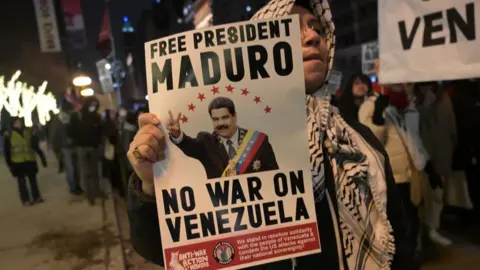
Early Monday, a handcuffed, jumpsuit-clad Nicholas Maduro exited a military helicopter in Manhattan, accompanied by armed federal agents.
The Venezuelan president had been held overnight in a infamous federal facility in Brooklyn, before authorities moved him to a Manhattan federal building to confront indictments.
The top prosecutor has asserted Maduro was brought to the US to "face justice".
But legal scholars doubt the lawfulness of the administration's maneuver, and contend the US may have infringed upon global treaties concerning the military intervention. Domestically, however, the US's actions enter a legal grey area that may nevertheless culminate in Maduro facing prosecution, irrespective of the circumstances that delivered him.
The US maintains its actions were permissible under statute. The executive branch has accused Maduro of "narco-trafficking terrorism" and enabling the shipment of "thousands of tonnes" of illicit drugs to the US.
"The entire team conducted themselves professionally, firmly, and in strict accordance with US law and established protocols," the Attorney General said in a release.
Maduro has repeatedly refuted US allegations that he manages an illegal drug operation, and in the courtroom in New York on Monday he pled of innocent.
Global Legal and Action Questions
Although the charges are focused on drugs, the US legal case of Maduro comes after years of criticism of his rule of Venezuela from the broader global community.
In 2020, UN investigators said Maduro's government had carried out "grave abuses" constituting crimes against humanity - and that the president and other high-ranking members were implicated. The US and some of its allies have also charged Maduro of rigging elections, and withheld recognition of him as the rightful leader.
Maduro's alleged connections to narco-trafficking organizations are the centerpiece of this legal case, yet the US procedures in placing him in front of a US judge to respond to these allegations are also under scrutiny.
Conducting a military operation in Venezuela and spiriting Maduro out of the country under the cover of darkness was "completely illegal under global statutes," said a professor at a institution.
Scholars highlighted a host of problems presented by the US mission.
The UN Charter bans members from threatening or using force against other countries. It permits "self-defense against an imminent armed attack" but that risk must be imminent, analysts said. The other provision occurs when the UN Security Council sanctions such an operation, which the US lacked before it took action in Venezuela.
International law would consider the narco-trafficking charges the US accuses against Maduro to be a police concern, authorities contend, not a armed aggression that might warrant one country to take armed action against another.
In public statements, the administration has described the operation as, in the words of the Secretary of State, "essentially a criminal apprehension", rather than an hostile military campaign.
Precedent and Domestic Jurisdictional Questions
Maduro has been formally charged on narco-terrorism counts in the US since 2020; the Department of Justice has now issued a revised - or new - charging document against the Venezuelan leader. The executive branch contends it is now enforcing it.
"The action was conducted to facilitate an active legal case linked to widespread narcotics trafficking and connected charges that have incited bloodshed, upended the area, and exacerbated the narcotics problem causing fatalities in the US," the AG said in her statement.
But since the mission, several legal experts have said the US broke global norms by taking Maduro out of Venezuela without consent.
"A sovereign state cannot invade another foreign country and arrest people," said an expert on international criminal law. "In the event that the US wants to arrest someone in another country, the established method to do that is a formal request."
Even if an defendant is accused in America, "The United States has no authority to go around the world enforcing an detention order in the jurisdiction of other ," she said.
Maduro's lawyers in court on Monday said they would challenge the lawfulness of the US action which took him from Caracas to New York.
There's also a long-running jurisprudential discussion about whether presidents must adhere to the UN Charter. The US Constitution considers treaties the country enters to be the "binding legal authority".
But there's a clear historic example of a previous government contending it did not have to follow the charter.
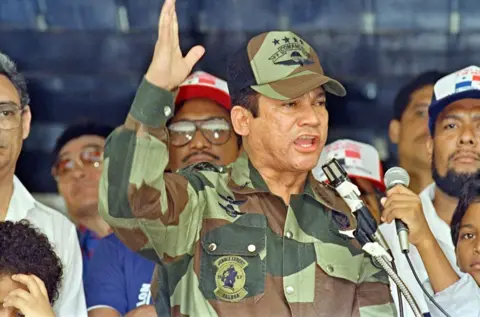
In 1989, the Bush White House captured Panama's de facto ruler Manuel Noriega and extradited him to the US to face narco-trafficking indictments.
An restricted Justice Department memo from the time stated that the president had the constitutional power to order the FBI to apprehend individuals who flouted US law, "even if those actions contravene traditional state practice" - including the UN Charter.
The writer of that document, William Barr, later served as the US AG and issued the first 2020 charges against Maduro.
However, the opinion's logic later came under questioning from academics. US the judiciary have not made a definitive judgment on the issue.
Domestic Executive Authority and Jurisdiction
In the US, the issue of whether this operation broke any federal regulations is complex.
The US Constitution gives Congress the power to authorize military force, but places the president in command of the armed forces.
A War Powers Resolution called the War Powers Resolution places limits on the president's power to use military force. It compels the president to inform Congress before deploying US troops overseas "to the greatest extent practicable," and report to Congress within 48 hours of initiating an operation.
The administration did not give Congress a heads up before the mission in Venezuela "due to operational security concerns," a top official said.
However, several {presidents|commanders


